
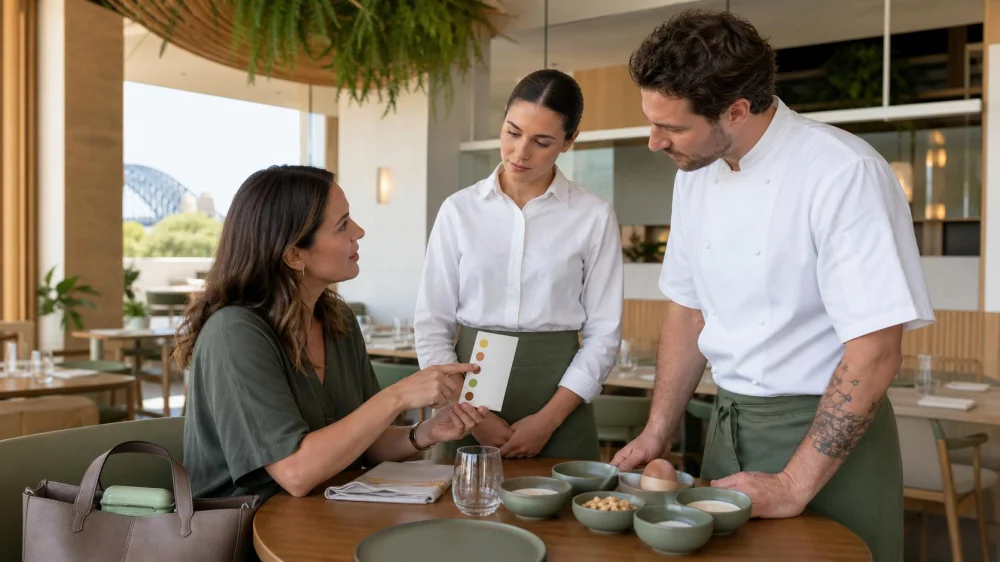
Australian Restaurant Dietary Request: Speak to Staff Directly
Menu icons and online filters can start a dietary conversation, but they cannot replace current ingredient and preparation information. For a food allergy, coeliac disease, intolerance, religious requirement, or personal preference, contact the Australian restaurant, describe the need precisely, and ask trained staff about ingredients, substitutions, shared equipment, and cross-contact before ordering.
Quick answer
Say “I have a food allergy to…” or name the medical or dietary requirement rather than only asking whether a dish is “free from.” Ask who can verify the current recipe, sauces, garnishes, stock, marinades, fryer, utensils, and substitutes. If staff cannot confirm safe handling, choose another dish or venue. Carry prescribed emergency medicine and follow the personal action plan.

State the type of request
An allergy, coeliac disease, intolerance, vegan preference, and religious restriction have different risks and thresholds. Do not describe a severe allergy as a preference to make the conversation easier. State the exact allergen and whether trace cross-contact matters.
For multiple or complex needs, provide a concise written list in plain English and discuss it verbally. Translation cards can help, but the restaurant still needs to ask questions and confirm what it can provide.
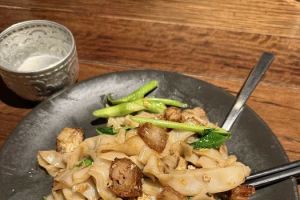
Chat Thai
SydneyCouncil of the City of SydneyNew South Wales
450 Market St, Sydney NSW 2000, Australia
Call before booking
Contact the exact location during a quieter time. Ask whether a manager or chef can review the request, whether recipes change, and which service period has the best capacity. Banquets, buffets, tasting menus, bakeries, and shared kitchens may have different limitations.
Record the name or role of the person, date, and agreed options, then add the requirement to the reservation. Treat the early conversation as provisional because ingredients and kitchen conditions can change.
Repeat it on arrival
Tell the host and server before drinks, bread, snacks, or shared plates arrive. Ask them to mark the table and involve the trained person responsible. Do not assume reservation notes automatically reached the kitchen.
Keep the diner with the dietary need involved. A companion should not guess on their behalf. If the restaurant is unexpectedly busy or the menu changed, reassess the plan before ordering.
Ask dish-specific questions
Ask about every component: base ingredients, cooking fat, spice mix, sauce, dressing, stock, garnish, bread, dessert decoration, beverage additions, and packaged product. “No nuts on top” does not answer whether paste, flour, oil, or shared equipment contains the allergen.
Food Standards Australia New Zealand says food service should provide clear, current information about allergens directly or indirectly present. Ask for information using the specific allergen name.
Discuss cross-contact
Ask about shared fryers, grills, pans, woks, toasters, pizza ovens, preparation boards, knives, tongs, scoops, cloths, gloves, storage bins, and buffet utensils. A recipe can omit an allergen while the process still creates contact.
Do not demand a guarantee the restaurant cannot honestly make. Decide according to the medical plan and risk tolerance. When the kitchen cannot control exposure, declining the dish is the safer choice.
Confirm substitutions
Repeat the approved dish and changes when ordering. Ask staff to tell you before any substitute is made. A different bread, sauce, garnish, milk, stock, or brand may introduce an allergen or conflict with another restriction.
When food arrives, ask the server to identify the modified plate. Do not swap garnishes at the table, taste to test, or remove an allergen from the surface. Send an uncertain plate back through the trained staff process.
Keep the emergency plan
Carry the prescribed adrenaline injector and ASCIA action plan when at risk of anaphylaxis. Tell companions where they are and how to help. Do not store emergency medicine in a hot car or checked coat.
For suspected anaphylaxis in Australia, use the adrenaline injector as directed, call triple zero (000), ask for an ambulance, and follow the action plan. Do not let the person stand or walk while waiting for help.
Use clear records
Keep reservation notes, staff names or roles, the ordered dish, substitutions, and receipt. If a reaction occurs, save ingredient information and packaging when safely available and seek medical care before pursuing administrative questions.
Report the incident to the restaurant manager with factual timing and symptoms. Healthcare professionals and relevant food authorities can advise on medical and regulatory follow-up.
Frequently asked questions
Are menu icons enough?
No. Verify current ingredients and preparation directly with trained staff.
Is gluten-free the same as safe for coeliac disease?
Not automatically. Ask about ingredients, shared equipment, and the restaurant’s process.
Can I remove the garnish?
No. Surface removal does not undo contact or ingredients already in the dish.
What is the Australian emergency number?
Call triple zero (000) for an ambulance when anaphylaxis is suspected.
Next steps
Call before booking, state the exact requirement, identify dishes the restaurant can verify, repeat the conversation on arrival, and confirm the plate at service. Carry the prescribed action plan and medicine, and choose another option when safe handling cannot be confirmed.
For future visits, do not assume a previously safe order is unchanged. Ask again about the current recipe, suppliers, substitute ingredients, shared equipment, and staff process. Review any new diagnosis or emergency plan with the treating clinician rather than expanding or restricting the diet based only on restaurant experiences.
See FSANZ food-service allergy information and Healthdirect anaphylaxis guidance.

 Gözleme King Sydney4.0 (206 reviews)
 The Coffee Emporium Sydney Westfield4.0 (62 reviews)
 Metropole Cafe4.0 (1020 reviews)
 THE TERNARY RESTAURANT4.0 (1011 reviews)
 ONEA Café4.0 (77 reviews)
 San Valentino3.0 (153 reviews)
 How Gen Z Is Shaping Australia’s Restaurant Menu Trends
 Best Seafood Restaurants in Australia with Stunning Ocean Views
 Australian Restaurant Surcharges: What Diners Should Check
 Where to Eat Authentic Finnish Food in Australia for Nordic Cuisine
 Best Cafes in Sydney with Outdoor Seating for Sunny Days and Fresh Air Guide
 Sydney BYO Restaurant Guide: Check Fees, Drinks, and Service