
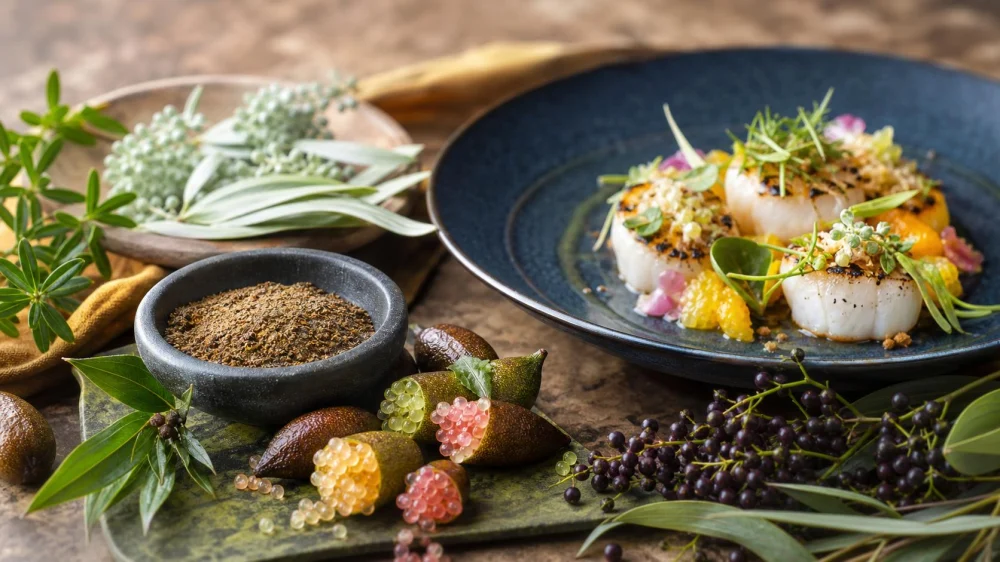
Australian Native Ingredient Menu Guide: Finger Lime, Wattleseed, and More
On this page
- Quick answer
- Read native ingredient descriptions with context
- Finger lime: tart pearls and citrus lift
- Lemon myrtle: a concentrated aromatic note
- Wattleseed: roasted depth in sweet or savoury dishes
- Pepperberry: warm spice and fruit character
- Recognise other native ingredients
- Ask how the kitchen uses the ingredient
- Check allergens and dietary needs
- Choose respectful sourcing and storytelling
Quick answer
When an Australian restaurant menu lists finger lime, lemon myrtle, wattleseed, pepperberry, quandong, riberry, Kakadu plum, saltbush, or warrigal greens, ask what part of the plant is used, how it is prepared, and what role it plays in the dish. A native ingredient may be a garnish, seasoning, puree, infused oil, crumb, sauce, or central component, so the name alone does not predict the full flavour.
Native foods are connected to Aboriginal and Torres Strait Islander cultures, knowledge, and Country. Look for menus that identify producers, communities, regions, and collaborations accurately. Do not forage or taste an unidentified native plant; edible species and safe preparation require expert knowledge.
Read native ingredient descriptions with context
“Native Australian ingredient,” “bush food,” and “bush tucker” may appear on menus, but restaurants use these terms differently. Ask which ingredient is present and whether it is wild-harvested, cultivated, dried, roasted, frozen, or fresh. Processing can change aroma, texture, colour, and intensity.
The Australian Museum overview of Indigenous foods notes the long cultural importance of foods including lemon myrtle, native mint, and warrigal greens. A thoughtful menu should do more than present the ingredients as a novelty; it should avoid vague claims and credit knowledge and supply relationships where appropriate.

Harry's Café de Wheels - Darling Quarter
SydneyCouncil of the City of SydneyNew South Wales
Kiosk 1/1-25 Harbour St, Darling Quarter Located in: Darling Harbour, Sydney NSW 2000, Australia
Finger lime: tart pearls and citrus lift
Australian finger lime is a native citrus whose interior separates into small juice-filled vesicles often described as pearls. The flavour is generally acidic and citrus-like, but varieties differ in colour, aroma, and intensity. It may appear with seafood, raw fish, oysters, desserts, drinks, sauces, or rich foods that benefit from acidity.
Ask whether the dish uses fresh pearls, juice, zest, puree, or a preserved product and whether it is added at the end or cooked. The CSIRO overview of native limes describes native lime flavours as relatively acidic and notes uses in sauces, preserves, condiments, beverages, and fresh garnishes.
Lemon myrtle: a concentrated aromatic note
Lemon myrtle is valued for strongly lemon-scented leaves. Chefs may use dried leaf powder, an infusion, syrup, custard, tea, sauce, biscuit, cake, ice cream, seafood seasoning, or savoury rub. Its aroma can be more concentrated than the word “lemon” suggests.
Ask whether it is subtle or prominent and what balances it. In a dessert it may work with cream, chocolate, berries, or coconut; in a savoury dish it may sit beside fish, poultry, vegetables, or herbs. Preparation and dose matter more than a simple flavour label.
Wattleseed: roasted depth in sweet or savoury dishes
Edible seeds from selected Acacia species are commonly roasted and milled before culinary use. Descriptions often compare their aroma with coffee, cocoa, nuts, or warm spice, but the exact profile depends on species, roasting, grind, and the surrounding dish.
Wattleseed may appear in bread, crackers, granola, ice cream, chocolate, cake, sauces, crusts, or drinks. Ask whether it contributes texture, aroma, bitterness, or body. Never assume seed from any wattle is edible; restaurants should source identified food-grade material from knowledgeable suppliers.
Pepperberry: warm spice and fruit character
Mountain pepper or pepperberry usually refers to ingredients from Tasmannia species. Menus may use dried berries, ground seasoning, fresh or dried leaves, sauces, marinades, or spice blends. Heat and aroma can build differently from ordinary black pepper.
Ask how spicy the serving is and whether pepperberry appears in a blend with chilli, salt, garlic, or other spices. It may complement meat, fish, vegetables, cheese, sauces, and desserts. Colour can deepen in some preparations, but appearance alone does not tell you the dose.
Recognise other native ingredients
Quandong may bring tart fruit character to chutneys, sauces, fillings, and desserts. Riberry can appear in jams, relishes, drinks, and fruit preparations. Kakadu plum is used in powders, sauces, drinks, and desserts; saltbush may season or garnish savoury food; warrigal greens may be cooked and served like leafy greens.
Muntries, native mint, lemon aspen, bush tomato, native thyme, and other ingredients may also appear. Common names can refer to different plants or preparations, so ask the kitchen instead of relying on a flavour list found elsewhere. Avoid medical or nutritional conclusions based only on an ingredient name.
Ask how the kitchen uses the ingredient
Useful questions include: Is it fresh, dried, roasted, fermented, preserved, or infused? Is it the main flavour or a small garnish? Which part of the plant is used? Is the dish sweet, tart, bitter, spicy, smoky, or savoury? Can I taste a sauce separately before committing to a large serving?
For a tasting menu, ask how many courses repeat similar native flavours and whether matching drinks contain the same ingredients. If you are new to them, choose a preparation that names both the native ingredient and a familiar base so you can understand its contribution.
Check allergens and dietary needs
Do not infer allergen safety from “native,” “natural,” “plant-based,” or “gluten-free” marketing language. A wattleseed dessert may contain dairy, egg, wheat, peanuts, or tree nuts; a finger-lime dish may include shellfish or fish; a spice blend may contain undeclared-to-you components that staff need to verify.
Tell the restaurant the specific allergy before ordering and ask about the entire dish, garnishes, sauces, shared equipment, and cross-contact. People with serious allergies should follow their medical plan and decide based on the restaurant’s current ingredient and preparation information.
Choose respectful sourcing and storytelling
Look for specific producer names, regional provenance, Indigenous-owned suppliers, community partnerships, and accurate acknowledgements rather than generic claims that one ingredient represents all Indigenous food traditions. Australia contains many Nations, Countries, languages, climates, and food knowledge systems.
Ask the restaurant how it learned about and sourced the ingredient without expecting staff or Indigenous guests to provide cultural education on demand. Enjoy the dish with curiosity, credit, and attention to context. A strong native-ingredient menu can connect flavour with place while respecting the people and knowledge behind it.





 Gowings4.0 (1121 reviews)
 Madison Ave Coffee5.0 (1 reviews)
 Lüneburger German Bakery5.0 (5 reviews)
 Gözleme King Sydney4.0 (206 reviews)
 Esque4.0 (8 reviews)
 Guzman y Gomez - ICC Darling Harbour4.0 (770 reviews)
 The Best Late Evening Small Plates Restaurants in Melbourne’s CBD
 Where to Eat Authentic Finnish Food in Australia for Nordic Cuisine
 Where to Eat Authentic Laotian Food in Australia for Southeast Asian Cuisine
 Cheap Eats in Sydney Under $20 That Don’t Compromise on Taste
 How Gen Z Is Shaping Australia’s Restaurant Menu Trends
 The Best Sushi and Sashimi Restaurants in Perth for Premium Seafood Lovers