
Australian Restaurant Surcharges: Read the Menu and Bill
Article guide
Quick answer
Before ordering at an Australian restaurant, check the menu, booking terms, and payment notice for weekend, public-holiday, service, booking, and card surcharges. These fees have different triggers. Confirm the percentage or amount, whether multiple fees can apply, and whether a surcharge-free payment option exists. Before tapping a card, compare the itemised bill with the advertised terms and ask staff to explain any unexpected charge.

Horse's Head Bar
SydneyCouncil of the City of SydneyNew South Wales
Floor Five, 198 Pitt St, Sydney NSW 2000, Australia
Identify which fee applies
“Surcharge” can describe several different charges. A Sunday or public-holiday surcharge is tied to when the meal is supplied. A card surcharge is tied to how the bill is paid. A booking fee, service charge, cake fee, or group fee may be tied to a reservation or service. A tip is different again and should not be confused with a mandatory charge.
Ask three simple questions before ordering:
- Which surcharge applies to this sitting?
- What percentage or fixed amount will be added, and to which part of the bill?
- Could another surcharge be added when I choose a payment method?
For a group, check whether the surcharge applies to the full account, each person, a set menu, beverages, or optional extras. If the booking platform collected a deposit or fee, ask how it will appear on the final bill.
Check how it is displayed
The Australian Competition and Consumer Commission explains that cafés and restaurants do not need to print a second price beside every menu item for a weekend or public-holiday surcharge if the menu includes the required surcharge wording prominently. The notice should not be hidden in fine print that is less prominent than the menu prices.
Read physical menus, QR menus, specials boards, and booking confirmations. If different versions conflict, ask which terms govern before placing the order and save a screenshot when the price matters. Delivery platforms and venue dining may have different fee structures even for the same dish.
A menu surcharge can make mental arithmetic awkward. For a percentage fee, multiply the subtotal to which it applies by the stated rate, then add the result. Ask staff whether the point-of-sale system rounds individual items or the final total if a small discrepancy appears.
Understand card surcharges
As at 10 August 2026, Australian businesses can generally apply a surcharge to certain card payments, but the ACCC says it must not exceed the business's cost of accepting that payment type. If a consumer has no way to pay without a surcharge, the minimum surcharge must be included in the displayed price. When a surcharge-free method is available, businesses should still display payment surcharges prominently before booking, ordering, or payment.
The card type can matter. Debit, credit, and other payment methods may have different costs and rates. Ask the restaurant which payment option avoids or reduces a fee rather than assuming that inserting, tapping, using a digital wallet, or selecting an account will be treated identically.
The ACCC also reports an upcoming change: from 1 October 2026, Visa, Mastercard, and eftpos networks can introduce “no surcharge” rules for prepaid, debit, and credit cards on their networks. The card networks' scheme rules and merchant contracts will determine implementation. Until then, the ACCC says businesses must continue following the current card-surcharge laws. Because this transition is time-sensitive, check current ACCC and payment-network information when reading this article after that date.
Review the bill before paying
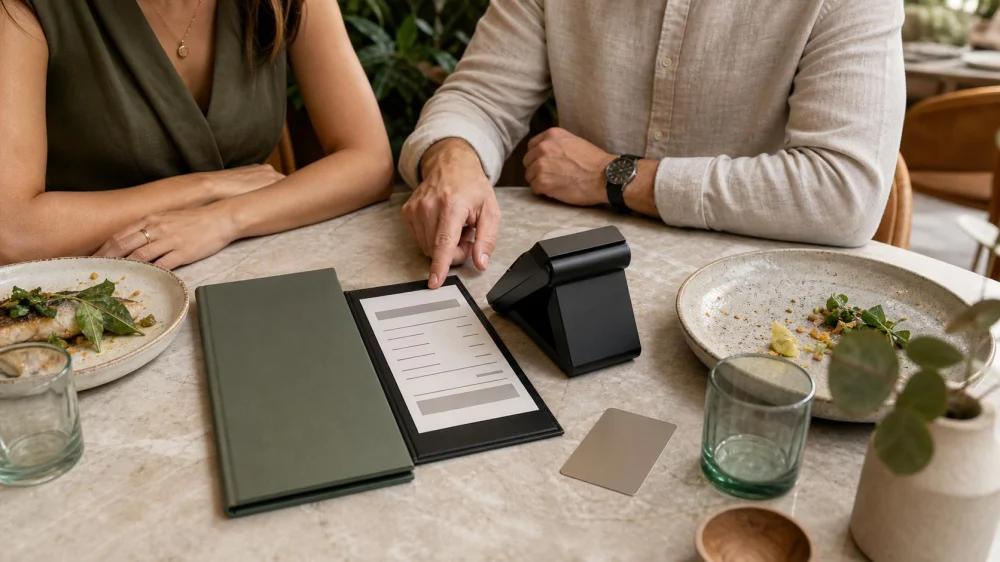
Ask for an itemised bill and review it before presenting a card. Match ordered items, quantities, deposits, discounts, and surcharges. If both a public-holiday surcharge and a card surcharge appear, confirm that each was disclosed and that the card fee is calculated for the payment method used.
Raise a discrepancy calmly with the restaurant first. Point to the menu or booking term and ask for the calculation. A staff member may correct an input error or explain a fee that was disclosed elsewhere. Keep the receipt and any relevant menu photo or booking record if the issue remains unresolved.
The ACCC accepts reports about potentially excessive card surcharges and misleading prices, but it says it does not resolve individual card-surcharge complaints. Its consumer guidance sets out steps for contacting the business and seeking further help.
Diner checklist
- Check the date for weekend or public-holiday pricing.
- Read the menu and booking terms before ordering.
- Identify each fixed fee or percentage surcharge.
- Ask whether multiple surcharges can apply together.
- Confirm how a deposit or prepaid amount is credited.
- Check available payment methods and their fees.
- Request an itemised bill before tapping or inserting a card.
- Compare the calculation with the disclosed terms.
- Ask the business to address any discrepancy first.
- Keep the receipt and relevant booking or menu record.
Limitations and changing rules
This article provides general consumer information, not legal advice. Pricing and card-surcharge rules can change, and a particular fee may depend on facts not visible on a menu excerpt. Consult the current ACCC guidance and seek appropriate consumer or legal help for an individual dispute.
Rules about card surcharges are in a transition period in 2026. The date and network details above are based on ACCC information available on 10 August 2026. Restaurants, payment providers, and card networks may update their practices, so do not rely on an old screenshot or this article alone after the announced change date.
Frequently asked questions
Can a restaurant charge a Sunday or public-holiday surcharge?
Australian consumer guidance allows restaurant and café menu surcharges when required display rules are met. Check the prominent menu notice for the percentage and days covered.
Is a card surcharge the same as a service charge?
No. A card surcharge is triggered by a payment method and is subject to specific cost-of-acceptance rules. A service charge may have a different trigger and disclosure basis.
What if every accepted payment method has a surcharge?
The ACCC says that when there is no way to pay without a surcharge, the minimum unavoidable surcharge must be included in the displayed price.
Can I avoid a card surcharge by paying cash?
Possibly, if the restaurant accepts cash without a fee. Ask before ordering; some venues are cashless, and the displayed-price rule may then be relevant.
What should I do about an unexpected fee?
Ask for the itemised calculation and show the restaurant the price or terms you relied on. If it is not resolved, keep records and consult current ACCC guidance about next steps.
Evidence notes
The ACCC price-display guidance explains prominent menu wording for restaurant and café weekend and public-holiday surcharges. It also covers single-price principles and examples.
The ACCC's current consumer card-surcharge guidance describes the ban on excessive card surcharges, display expectations, surcharge-free options, complaint steps, and the announced 1 October 2026 network-rule transition.
Conclusion
A surcharge is easiest to assess before the order is placed. Identify what triggers it, find the displayed rate, check whether another fee applies at payment, and retain the information long enough to review the bill. A quick question at the start can prevent confusion at the end—and an itemised receipt gives everyone a clearer basis for correcting a genuine error.


 Salt&Pepper3.0 (9 reviews)
 Dymocks Cafe4.0 (470 reviews)
 The August3.0 (121 reviews)
 Gong Cha Sydney Central Plaza4.0 (11 reviews)
 Parlour4.0 (581 reviews)
 Horse's Head Bar4.0 (22 reviews)
 Best Restaurants in Melbourne for Romantic Evenings and Date Nights
 Top Restaurants in Sydney for Luxury Harbour View Dining
 Best Restaurants Near Me in Sydney Open Late at Night
 The Best Taproom Restaurants in Australia That Marry Craft Beer and Food
 How Restaurants Are Creating Seasonal Menus That React to Climate in Australia
 Best Cafes in Sydney Outdoor Seating Guide for Sunny Days