
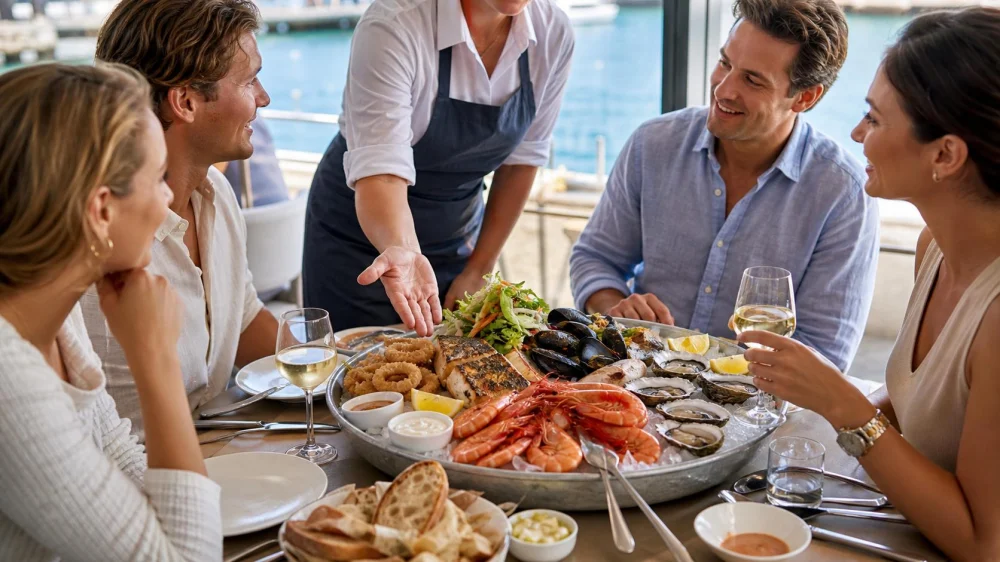
How to Order a Seafood Platter for a Group in Australia
On this page
- Quick answer
- Ask what is actually on today's platter
- Match the platter to the rest of the meal
- Separate preference from seafood allergy
- Choose cooking and serving styles
- Share shells, sauces, and premium pieces fairly
- Handle leftovers and the final bill
- Seafood-platter checklist
- Limitations and urgent allergy notes
- Frequently asked questions
- Australian seafood-allergy notes
- Ask for today's exact count
Quick answer
Before ordering a seafood platter, ask which fish, crustaceans, molluscs, oysters, sides, sauces, and garnishes are included today; whether items are raw, chilled, grilled, fried, steamed, or baked; how many diners it is designed to feed; and whether price is fixed or market-based. Tell the server about fish or shellfish allergy before discussing substitutions and ask about stock, sauces, fryer oil, utensils, and cross-contact.
A large platter can be a tasting centrepiece rather than a complete meal for the advertised number.
Chat Thai
SydneyCouncil of the City of SydneyNew South Wales
450 Market St, Sydney NSW 2000, Australia
Ask what is actually on today's platter
Menus may use broad phrases such as local fish, prawns, oysters, bugs, crab, lobster, mussels, calamari, or seasonal shellfish. Species, count, size, origin, and preparation can change with supply. Ask for today's exact list and whether shells, heads, bones, or whole fish are present.
Clarify substitutions before ordering, especially when a premium item is replaced. For market-price platters, ask for the current total, not only a per-weight or per-person figure.
Little Chinese Kitchen
SydneyCouncil of the City of SydneyNew South Wales
22ALP Market St, Sydney NSW 2000, Australia
Match the platter to the rest of the meal
Tell the server the number of adults and children, appetite, and other dishes. Ask whether the platter is a starter, shared main, or feast and how many pieces of limited items it contains.
Balance rich fried seafood with chilled or grilled items, vegetables, salad, bread, or another side. Order fewer extras initially if additions are easy; platters lose quality when the table overorders and food sits too long.
Separate preference from seafood allergy
Fish, crustaceans, and molluscs are different biological groups. A person may react to one and not another, but only their clinician should define avoidance. In a mixed platter, juices, steam, tongs, fryer oil, grills, sauces, and garnishes can cross-contact.
Name the exact allergen and severity, speak to knowledgeable staff, and ask whether a separate dish can be prepared safely. Removing a prawn or oyster from the finished platter does not remove exposure. If the kitchen cannot control risk, choose another meal or venue.
Choose cooking and serving styles
Ask which items arrive raw or lightly cooked and whether alternatives are available. Raw oysters and chilled seafood require careful temperature control; fried components soften quickly; grilled fish can contain bones.
Request lemon, sauces, butter, bread, finger bowls, shell bowls, crackers, picks, and serving utensils as appropriate. Confirm dairy, egg, gluten, fish, shellfish, garlic, and other ingredients in sauces.
Share shells, sauces, and premium pieces fairly
Divide oysters, prawns, crab sections, lobster, or other limited items before people begin. Use serving utensils and separate shell waste from edible food. Keep personal forks out of shared sauces.
Place hot, heavy, or sharp-edged platters securely and away from children. Ask staff for help moving them. Do not stack shells where they can fall or cut someone.
Handle leftovers and the final bill
Seafood is highly perishable. Ask whether leftovers can be packed and follow current food-safety instructions for time, temperature, transport, refrigeration, and reheating. When in doubt, leave food that has sat out too long.
Confirm whether the group will split the platter equally, assign it to certain diners, or let a host pay. Check market price, service charges, public-holiday or card surcharges, and add-ons before payment.
Seafood-platter checklist
- Get today's species, count, size, and preparation.
- Ask whether pricing is fixed or market-based.
- Match platter yield to other dishes.
- State fish or shellfish allergy clearly.
- Check sauces, stock, fryer, and cross-contact.
- Confirm raw, cooked, hot, and chilled items.
- Request safe serving and shell tools.
- Plan leftovers and bill allocation.
Limitations and urgent allergy notes
- This guide cannot verify freshness, doneness, allergens, or kitchen controls.
- Pregnant, older, immunocompromised, or medically vulnerable diners should follow professional advice about raw or undercooked seafood.
- Healthdirect advises calling triple zero (000) for symptoms such as breathing difficulty or swelling of the face, lips, or tongue that may indicate a serious reaction.
- Follow the person's allergy action plan and prescribed emergency treatment.
Frequently asked questions
Does “serves four” mean four full mains?
Not always. Ask whether the estimate assumes other dishes and how many pieces each diner receives.
Are prawns and shellfish the same allergy group as fish?
No. Fish, crustaceans, and molluscs are distinct groups, though cross-contact can occur.
What is market price?
It is a variable current price. Ask for the exact total before confirming the order.
Can fried seafood be gluten-free?
Ingredients and shared fryers vary. Ask the kitchen about batter, crumbs, oil, and cross-contact.
Should we order the platter in advance?
Large, seasonal, or premium platters may need notice or a deposit; ask when reserving.
Australian seafood-allergy notes
Healthdirect Australia explains that people may be allergic to fish, crustaceans, molluscs, or multiple groups and that seafood allergy can cause anaphylaxis. Restaurant cross-contact requires direct discussion with the venue.
Ask for today's exact count
Before the server places the order, ask them to list every seafood item and quantity, preparation, current total price, and realistic serving yield. Confirm allergens and substitutions in the same conversation.


 Salt&Pepper3.0 (9 reviews)
 Harry's Café de Wheels - Darling Quarter3.0 (119 reviews)
 Gloria Jean's Sydney Central Plaza3.0 (183 reviews)
 Esque4.0 (8 reviews)
 The Coffee Emporium Sydney Westfield4.0 (62 reviews)
 Grill'd Burgers - Westfield Sydney4.0 (916 reviews)
 Where to Find the Best Fine Dining Restaurants in Australia for Luxury Experiences
 Best Restaurants in Sydney for Office Lunch Catering and Takeaway | Sydney Eats Explorer
 The Best Restaurants in Australia for Coffee Lovers That Also Serve Meals
 Where to Eat Authentic Laotian Food in Australia for Southeast Asian Cuisine
 Top Cafes in Sydney for Study-Friendly Student Spaces
 The Best Late Evening Small Plates Restaurants in Melbourne’s CBD