

Australian Banquet Menus: What Groups Should Confirm
On this page
Quick answer
Before booking an Australian restaurant banquet menu, ask whether every guest must participate, what is shared or served individually, how many courses arrive, and what the per-person price includes. Confirm dietary changes, children's options, drinks, cake or BYO rules, weekend or public-holiday surcharges, deposits, cancellation terms and the table time in writing.
This guide is for group dining in Australia. Restaurants use “banquet”, “feed me” and “set menu” differently, so the venue's current written terms control the booking.
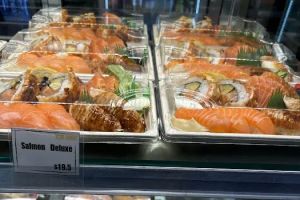
Yori Ozeki Myer Central Plaza
SydneyCouncil of the City of SydneyNew South Wales
MYER LOWER GROUND, CENTRAL PLAZA, 100 Market St, Sydney NSW 2000, Australia
What a banquet menu means
A banquet menu usually gives the table a planned sequence of dishes for a per-person price. Some courses may be shared in the centre, while desserts or mains may be individual. The kitchen may select dishes or allow the organiser to choose within a package.
Do not assume “banquet” means unlimited food, a buffet, or one of every dish on the à la carte menu. Ask how the restaurant describes the experience and whether serving quantities are adjusted to the number of guests.
Some venues require a banquet only above a certain group size or on busy dates. Others make it optional. Confirm whether the whole table must use the same menu and whether separate à la carte orders are allowed.

FISHBOWL - Pitt St Mall
SydneyCouncil of the City of SydneyNew South Wales
Sydney Central Plaza Food Court, Kiosk K3/5050 Pitt St, Sydney NSW 2000, Australia
Confirm courses and portions
Request the current menu with a date or version. Count the courses and identify which dishes are alternatives, which are shared, and which are served to each person. “Three-course banquet” may include several plates within one course.
Ask whether the listed quantity changes with group size. A table of five may receive one platter while a table of ten receives two. Clarify how staff replace an empty shared plate, if at all.
Tell the venue whether the group expects a light meal, full dinner, or celebration with additional cake. If appetites differ, ask whether extra dishes can be ordered and priced during service or must be arranged in advance.
Check price and booking terms
Confirm the per-person price and what it includes: food only, welcome drink, beverage package, filtered water, tea or coffee, cake service, room hire, gratuity, or service charge. Ask which items are optional additions.
Request current information about card fees, weekend or public-holiday surcharges, and minimum spend. Do not calculate from an old menu or review. The final date, service and payment method may change the total.
Read deposit, prepayment, cancellation and final-number terms. Note when the guest count becomes binding and what happens when someone cancels, arrives late or does not attend. Ask how refunds or credits are handled rather than assuming.
Discuss dietary requirements
Collect dietary requirements before confirming the menu. Send each need clearly—such as a named allergy, coeliac disease, vegetarian or vegan preference, religious restriction, or other ingredient avoidance—without grouping unlike needs under “special diet”.
Ask whether the kitchen can adapt the shared dishes, provide individual alternatives, or cannot accommodate a particular risk. A substituted dish may be different in quantity or sequence from the main banquet.
For severe allergies or coeliac disease, discuss ingredients and cross-contact directly with the venue. A vegetarian or gluten-friendly option is not automatically safe for every medical requirement.
Confirm the deadline for dietary information and repeat the final list shortly before the event. Do not add an unannounced requirement at the table and assume the full banquet can be changed safely.
Plan timing and service
Ask how long the banquet normally runs and whether the table has a fixed booking duration. Provide any hard departure deadline, speeches, presentations, transport or show timing before the restaurant plans the service.
Confirm whether the kitchen waits for the full party before sending the first course. Encourage guests to arrive early, especially when the venue has a short grace period or a second sitting.
For drinks packages, ask when the package starts and finishes, which drinks are included, whether responsible-service rules apply, and what non-alcoholic choices are available. No guest should feel required to drink alcohol because the group selected a package.
Make group decisions early
- Choose one organiser. They communicate the final count, dietary list and payment plan.
- Share the complete menu. Guests should see price, inclusions and dietary arrangements before agreeing.
- Set a response deadline. Leave time to meet the restaurant's final-number deadline.
- Decide payment. Confirm one bill, split payment, prepayment or reimbursement before the meal.
- Plan additions. Ask about cake, decorations, speeches, gifts and extra dishes rather than bringing them without approval.
- Reconfirm. Send the venue the final count and requirements in one dated message.
Banquet menu checklist
- The current menu and per-person price are saved.
- Shared, individual and alternative dishes are identified.
- Minimum group size and whole-table participation are confirmed.
- Drinks, cake, BYO and extra dishes are understood.
- Dietary requirements and cross-contact questions are documented.
- Deposit, final count, cancellation and no-show rules are read.
- Surcharges, card fees and minimum spend are checked.
- Table duration and service timing fit the event.
- Payment responsibility is clear to the group.
Limitations and important notes
Menu names, serving styles, surcharges and booking rights vary by venue, state or territory and booking date. This article does not interpret a contract or determine whether a fee is legally displayed.
For a dispute, keep the booking confirmation, menu version, receipts and correspondence, then raise it with the restaurant promptly. Seek appropriate consumer guidance when needed.
Frequently asked questions
Does everyone have to order the banquet?
Often, but not always. Ask whether the whole table must participate and how children or dietary alternatives are handled.
Is a banquet menu all you can eat?
Not unless the restaurant explicitly says so. It usually means a planned quantity and sequence of dishes.
Can we add à la carte dishes?
Some venues allow additions and others limit orders during a banquet. Confirm timing and price in advance.
Will the restaurant split the bill?
Policies vary, especially for large groups. Ask before booking and tell guests how payment will work.
Can leftovers be taken away?
Ask the venue. Food-safety, packaging and banquet policies affect what can be provided for takeaway.
Sources and evidence notes
The checklist reflects broad Australian group-dining practice: banquet menus are commonly priced per person, venues may set group and table conditions, and dietary requirements and final numbers need advance confirmation.
No standard price, surcharge, legal term, serving quantity, allergy accommodation or table duration is assumed. The venue's current menu, booking terms and direct confirmation control the event.
Next steps
Ask the restaurant for one document that shows the current menu, price, inclusions and booking terms. Send it to the group with a deadline for dietary needs and attendance. Before paying a deposit, get written answers about final numbers, surcharges, table duration and payment.

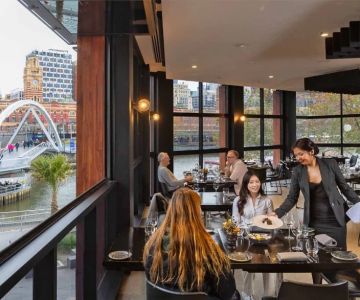
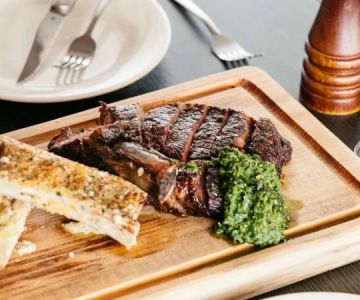
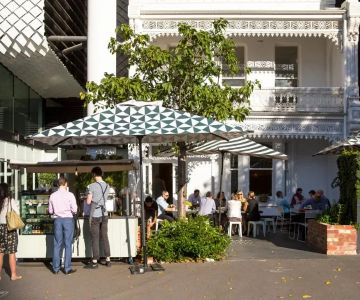

 Chat Thai3.0 (40 reviews)
 THE TERNARY RESTAURANT4.0 (1011 reviews)
 Betty's Burgers4.0 (3942 reviews)
 LAN GARDEN4.0 (19 reviews)
 QTea High Tea by QT Sydney4.0 (97 reviews)
 SWEET CREMA CAFE5.0 (20 reviews)
 Australian Banquet Menus: What Groups Should Confirm
 Where to Find the Best Chocolate Cake in Sydney for Dessert Lovers
 The Best Vegan-Friendly Fine Dining Restaurants in Australia
 How to Read an Australian Restaurant Menu
 The Best Spanish-Style Paella Spots in Melbourne You Won’t Want to Miss
 How Australia’s Restaurant Industry Is Shifting Towards Speedy Casual Dining Experiences