
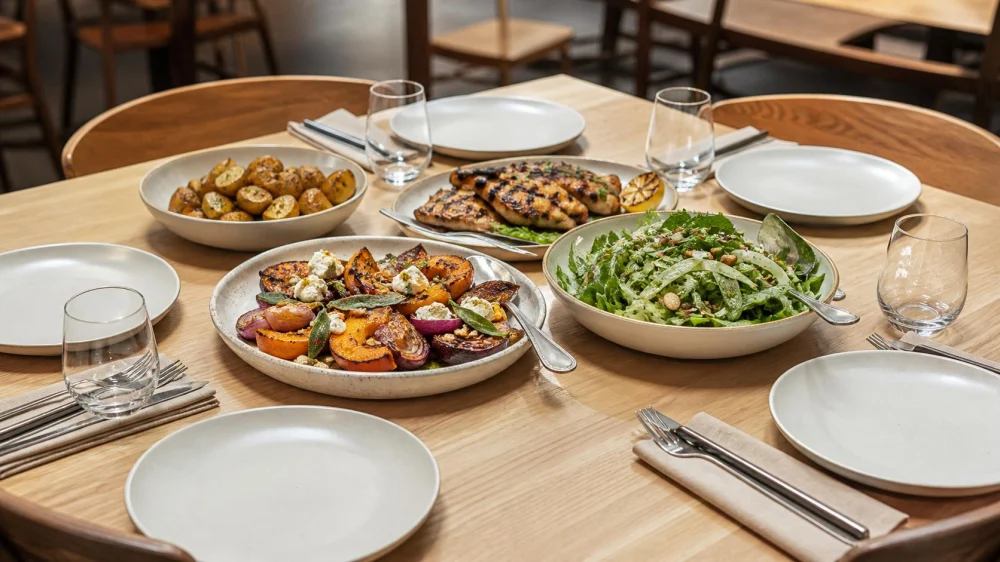
Australian Restaurant Shared Plates: Portions, Pace, and Price
On this page
Quick answer
At an Australian shared-plate restaurant, ask how many people each dish usually serves, whether plates arrive together or progressively, and which items are easy to divide. Start with a modest order, balance light and substantial dishes, confirm dietary needs, and add food later if the kitchen can accommodate it. Review per-dish prices and surcharges.
This guide is for couples, families, and groups dining across Australia. It helps organise an à la carte shared meal; banquet and set menus may follow different portion, substitution, and payment rules.

What shared plates mean
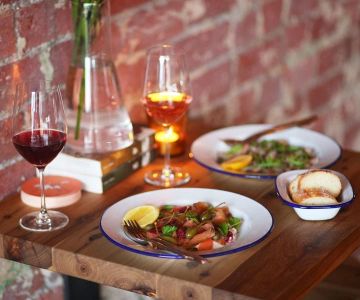
Shared plates are dishes ordered for the table rather than assigned as one complete main course per person. The style can range from snacks and small plates to large proteins, whole vegetables, pasta, rice, or desserts. “Designed to share” does not reveal an exact serving size.
Some restaurants send dishes as they are ready, creating a progressive meal. Others coordinate courses or let guests request a sequence. The menu may group items by size, but labels such as small, medium, and large are relative to that kitchen. The most useful question is, “How would you order for this number of diners?”
Shared dining is best for a group that wants variety and is comfortable making collective choices. It is not ideal when diners have conflicting dietary requirements, strongly different appetites, limited time, or a preference for a clearly individual meal.

Bar 83 at Sydney Tower
SydneyCouncil of the City of SydneyNew South Wales
Westfield Sydney, Level 4/108 Market St, Sydney NSW 2000, Australia
Estimate portions before ordering
Tell the server the group size and whether everyone is having a full meal. Mention children, light eaters, very hungry guests, or anyone who will not share every dish. Ask how many pieces are included and whether a dish can be portioned evenly. A plate with three items does not divide neatly among four people unless the kitchen can alter it.
Build variety by role rather than ordering several similar dishes. A practical group order might include a fresh or acidic item, a vegetable, a starch, and one or two substantial dishes. Sauce-rich or fried items can feel filling even when the plate looks small. Rice, bread, noodles, or potatoes can complete the meal, but check whether they are automatically included.
Do not assume the server's first suggestion is a minimum. Explain your appetite and ask whether it is easy to add another dish later. Starting slightly conservatively works when the kitchen remains open and extra orders arrive promptly. It works less well near closing time, during a pre-theatre meal, or when dishes require long preparation.
Plan the pace and table space
If you want a defined order, say so before the ticket reaches the kitchen. Ask for snacks first, larger dishes after, and desserts last. The restaurant may not be able to guarantee exact timing because different stations prepare food at different speeds. “Progressive service” usually means dishes arrive when ready rather than simultaneously.
Table space can become a practical limit. Large plates, water bottles, wine, share utensils, and personal phones quickly crowd a small table. Ask staff to clear finished dishes and bring serving utensils when needed. Do not move hot plates or serving stands to unstable edges.
Agree on simple table etiquette. Pass plates in a consistent direction, use the provided share spoon or tongs, and leave a fair portion for guests who have not served themselves. If a dish has limited pieces, count before taking seconds. Parents can plate portions for children rather than passing hot or heavy servingware across the table.
Dietary and group needs
Shared food increases the number of ingredients and utensils moving around the table. Tell staff about allergies, coeliac disease, religious restrictions, vegetarian or vegan needs, and other important requirements before ordering. Ask which dishes can be prepared safely, which share common fryers or equipment, and whether separate serving utensils are available.
A “vegetarian option” may not protect a guest with an allergy, and removing a visible garnish may not address cross-contact. If the restaurant cannot meet a medically necessary restriction through shared dishes, an individually plated option may be safer and easier. Follow the restaurant's current advice for its kitchen.
For groups splitting costs, decide whether everyone shares equally or pays for selected items. Alcohol, premium dishes, and individual add-ons can make an equal split feel unfair. Ask whether the restaurant accepts split bills, limits the number of cards, or adds a group, weekend, or public-holiday surcharge. Read the menu and booking terms.
Ordering checklist
- Count actual diners. Note children, non-sharers, and different appetite levels.
- State dietary needs. Do this before discussing dish choices.
- Ask about serving size. Confirm pieces, typical sharers, and included sides.
- Balance the order. Include fresh, vegetable, starch, and substantial elements.
- Confirm pacing. Learn whether dishes arrive progressively or in courses.
- Check long-lead dishes. Order slow-cooked or whole items early if required.
- Review prices and surcharges. Include drinks, extras, service charges, and card fees where disclosed.
- Plan payment. Confirm the restaurant's split-bill policy before the end.
Important notes and limitations
Portion guidance is subjective and can change with menu design, ingredient size, and diner appetite. Online photos can distort scale, and an old review may show a previous recipe. Current staff guidance and the actual menu are the best sources for the visit.
Prices, surcharge rules, booking terms, and allergen practices vary across Australia and by venue. This article provides general dining guidance, not legal, medical, or dietary advice. Guests with serious allergies or health conditions should use personalised professional advice and only dine where their needs can be accommodated.
Frequently asked questions
How many shared plates should a group order?
There is no universal number. Dish size, richness, pieces, appetite, and whether sides are included all matter. Ask staff to translate the specific menu for your group.
Can we add more dishes later?
Often, but timing depends on kitchen capacity and preparation time. Confirm before starting conservatively, especially near closing or before an event.
Do shared plates arrive at the same time?
Not necessarily. Many kitchens send them progressively. Request a sequence if timing matters, while recognising exact coordination may not be possible.
How do we handle one guest with an allergy?
Tell staff before ordering and ask about preparation and cross-contact. A separate individual dish and utensils may be the most practical option if the restaurant can provide them safely.
Evidence note
The guidance reflects common Australian restaurant service practices: staff explain portion intent, kitchens may send dishes when ready, and venues disclose their own booking, surcharge, dietary, and payment policies. Because these details are venue-specific, direct confirmation is more reliable than a generic serving formula.
Next steps
Before the meal, collect the group's dietary needs and payment preferences. At the table, ask the server to suggest a balanced order for the actual appetite and time available. Confirm pacing and surcharges, begin with a sensible range of dishes, and reassess before adding dessert or another substantial plate.


 Ten Stories4.0 (11 reviews)
 Vic On George3.0 (90 reviews)
 The August3.0 (121 reviews)
 Shiba's Kitchen4.0 (525 reviews)
 Betty's Burgers4.0 (3942 reviews)
 Gloria Jean's Sydney Central Plaza3.0 (183 reviews)
 Behind the Scenes: What It Takes to Run a Restaurant in Perth During Peak Season
 Australian Restaurant Table Time Limits: Plan the Meal
 Best Restaurants in Sydney for Authentic Local Food Experience
 Best Restaurants in Australia for Unique Fusion Cuisine Experiences
 Australian Wine by the Glass: Check Pour, Vintage, and Price
 Top Cafes in Sydney for Late Afternoon Coffee Breaks Guide