
Long Black vs Flat White: Ordering Coffee in Australia
On this page
Quick answer
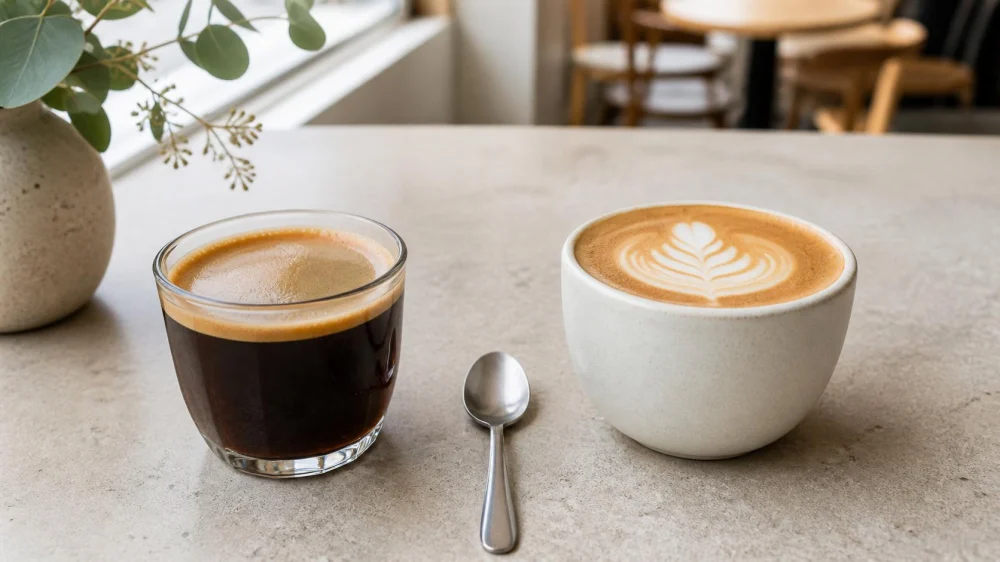
A long black combines espresso and hot water, so it tastes coffee-forward and contains no milk unless you add it. A flat white combines espresso with steamed milk and a thin, integrated layer of microfoam, producing a smoother, creamier drink. In Australia, recipes and cup sizes vary, so ask about shots, size, and milk.
This guide is for visitors and casual coffee drinkers ordering at Australian cafés. It explains common expectations, but each café's beans, equipment, recipe, and terminology can change the result.

Seven Miles Cafe
SydneyCouncil of the City of SydneyNew South Wales
Australia, New South Wales, Sydney George St, level 0
The core difference
A long black is a diluted espresso-style coffee without milk, while a flat white is an espresso-and-steamed-milk drink. That single distinction guides most choices. Pick a long black when you want to taste the roast and extraction more directly. Pick a flat white when you want milk sweetness, a softer texture, and a balanced coffee-and-dairy profile.
Both usually begin with espresso, but cafés decide how many shots to use and how much water or milk to add. A small drink may not simply be a reduced version of a large one; the shot-to-liquid ratio can change. If strength matters, ask how the café builds the particular size.
Neither name guarantees a specific caffeine amount. Caffeine depends on the coffee dose, bean, extraction, and number of espresso shots—not merely the volume of the finished cup.
Zeta Bar
SydneyCouncil of the City of SydneyNew South Wales
level 4/488 George St, Sydney NSW 2000, Australia
What to expect from a long black
A long black is commonly made by combining hot water with espresso. Many baristas place the water in the cup first and pour espresso over it, which can preserve more of the aromatic crema at the surface. In practice, technique and presentation differ, and crema alone is not a complete measure of quality.
The drink typically has a fuller espresso character than a very large, heavily diluted black coffee. You may notice acidity, sweetness, bitterness, roast character, and origin flavours more clearly because milk is not softening them. Temperature and water volume affect how quickly those flavours become apparent.
A long black is best for a guest who enjoys black coffee, wants to compare beans, or prefers to control any milk addition. It may not be ideal for someone who dislikes espresso intensity or wants a naturally creamy texture. Ask for a little milk on the side if you want flexibility without committing to a milk-based drink.
What to expect from a flat white
A flat white combines espresso with finely textured steamed milk. The foam is normally integrated and relatively thin rather than forming a large dry cap. The goal is a smooth texture that carries through the drink, not a sharply separated layer of coffee and foam.
Compared with a cappuccino at the same café, a flat white often has less pronounced foam and may feel denser. Compared with a latte, it may be served in a smaller vessel or use a stronger coffee-to-milk ratio. These are tendencies, not universal rules. Some menus distinguish the drinks mainly through cup size and presentation.
A flat white is best for someone who likes espresso flavour moderated by milk. It is not ideal when you want a milk-free drink unless the café offers a suitable alternative milk and can prepare it to your needs. Alternative milks steam differently, so texture and sweetness can vary.
How to choose and customise
Begin with the role of milk. If you want none, order the long black. If you want milk integrated throughout, choose the flat white. Then consider strength. Ask whether the selected size includes one or two shots and whether an extra shot changes the price.
For temperature, use plain language. “Ready to drink” or “not extra hot” can preserve sweetness and texture, while an extra-hot request changes the milk. The café may have its own safe temperature practices. Do not assume a drink will be remade merely because it differs from another café's style; explain the practical issue politely.
If you need alternative milk, ask which options are available and whether there is a surcharge. Guests with allergies or medically necessary restrictions should tell staff clearly and ask about shared steam wands, jugs, utensils, and preparation surfaces. A café cannot guarantee suitability unless it understands the requirement and its own cross-contact controls.
Sweeteners, syrups, and flavour additions can mask subtle coffee characteristics. There is nothing wrong with customising, but taste the first sip before adding more. Stir a flat white gently if the espresso and milk feel uneven.
Ordering checklist
- Choose black or milk-based. Start with the difference that matters most.
- Check cup size. Look at displayed cups or ask for approximate volume.
- Confirm shots. Learn whether the chosen size changes the espresso dose.
- Select milk. State dairy or an available alternative and disclose relevant allergy needs.
- Describe temperature simply. Request standard, cooler, or extra hot only when needed.
- Ask about takeaway. A takeaway cup may have a different size from dine-in crockery.
- Listen for the name or number. Follow the café's pickup process without crowding the counter.
- Taste before adjusting. Add milk or sweetener after assessing the drink.
Important notes and variations
Coffee vocabulary is useful but not perfectly standardised. One Australian café's small flat white can resemble another's small latte. Bean choice, roast level, grinder setting, water, dose, milk brand, and barista technique all affect flavour. Current menu information and a brief conversation with the café are more reliable than rigid online definitions.
This article does not provide nutrition or medical advice. Guests monitoring caffeine, dairy, sugar, or allergens should use information supplied for the actual ingredients and seek professional guidance where appropriate.
Frequently asked questions
Is a long black the same as an Americano?
They share espresso and hot water, but recipes, order of preparation, water volume, and local usage can differ. Ask about the café's method if the distinction matters.
Is a flat white stronger than a latte?
It may taste stronger when it has less milk for the same espresso dose, but caffeine depends on the actual number and dose of shots.
Can I order a decaf long black or flat white?
Many cafés offer decaffeinated espresso, but availability and preparation practices vary. Confirm before ordering.
Which drink is better for tasting the coffee bean?
A long black usually reveals the coffee more directly because it has no milk. A flat white can highlight how the espresso combines with milk sweetness and texture.
Evidence note
The descriptions reflect common Australian specialty-coffee practice and widely used espresso preparation concepts. There is no single enforced recipe across all cafés, so the menu, cup, and barista's explanation are the strongest evidence for the drink in front of you.
Next steps
At your next café, compare the displayed cup sizes and ask how many shots are in each option. Choose a long black for a coffee-forward experience or a flat white for integrated steamed milk. Make one customisation at most, taste thoughtfully, and use what you learn to order more confidently next time.





 Ten Stories4.0 (11 reviews)
 Vic On George3.0 (90 reviews)
 The August3.0 (121 reviews)
 Shiba's Kitchen4.0 (525 reviews)
 Betty's Burgers4.0 (3942 reviews)
 Gloria Jean's Sydney Central Plaza3.0 (183 reviews)
 Behind the Scenes: What It Takes to Run a Restaurant in Perth During Peak Season
 Australian Restaurant Table Time Limits: Plan the Meal
 Best Restaurants in Sydney for Authentic Local Food Experience
 Best Restaurants in Australia for Unique Fusion Cuisine Experiences
 Australian Wine by the Glass: Check Pour, Vintage, and Price
 Top Cafes in Sydney for Late Afternoon Coffee Breaks Guide