
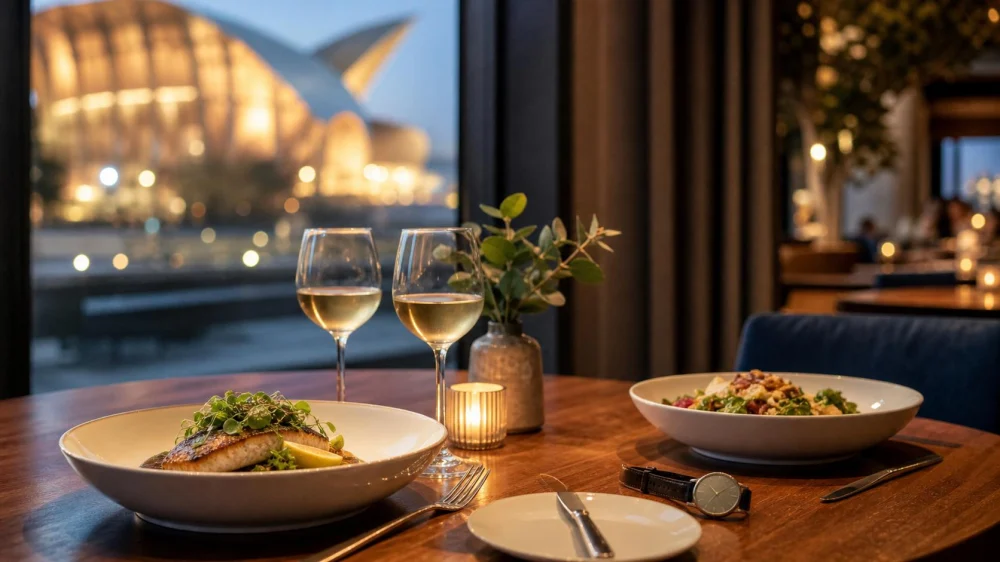
Pre-Theatre Dining in Australia: A Timing Checklist
On this page
Quick answer
For pre-theatre dining, choose a restaurant with a menu and service style that match your available window, tell staff your required departure time, and aim to reach the venue well before the advertised start. Build in time for paying, walking, ticket checks, finding seats and unexpected delays rather than treating the curtain time as your arrival time.
Pre-theatre dining means planning a restaurant meal around a fixed performance start, with the departure time—not the final course—setting the pace. It is best for diners who can book ahead, order decisively and accept a shorter menu when time is limited. It is not ideal for a leisurely tasting experience or an important celebration that should not feel rushed.
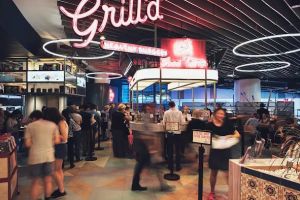
Grill'd Burgers - Westfield Sydney
SydneyCouncil of the City of SydneyNew South Wales
Westfield, Level 6/188 Pitt St, Sydney NSW 2000, Australia
Work backwards from the show time
Start with the time you want to be inside the venue, then calculate backwards. The performance start is only one part of the schedule. Your plan may also need to cover collecting tickets, security or bag checks, cloakroom queues, bathroom stops and finding the correct level or row.
A sensible planning sequence is:
- Set a venue-arrival target. Check the venue's own guidance and any instructions on your ticket or booking confirmation.
- Estimate travel from restaurant to venue. Consider walking distance, street crossings, parking, public transport frequency and accessibility needs.
- Add a delay buffer. Crowds, weather, a slow payment terminal or a misplaced ticket can consume several minutes.
- Set a firm restaurant departure time. Share this with everyone in your group before booking.
- Choose the meal start from the service format. A set menu, quick casual meal and multi-course dinner need different amounts of time.
Do not assume the kitchen can compress any menu into your available window. Ask the restaurant what is realistic for the day, group size and dishes you want.
Ko-V Korean Street Food
SydneyCouncil of the City of SydneyNew South Wales
LG/21g Pitt St, Sydney NSW 2000, Australia
Choose a restaurant that fits the plan
The closest venue is not automatically the safest choice. A nearby restaurant with a long queue, complex menu or unpredictable service may be harder to manage than a slightly more distant place that accepts bookings and offers a clearly timed set menu.
Compare restaurants using these decision criteria:
- Booking certainty: Can you reserve a table, and is there a stated seating duration?
- Service model: Table service can be comfortable, while counter ordering may reduce waiting before the order reaches the kitchen. Either can work if the process is clear.
- Menu length: A focused menu usually makes decisions easier. A dedicated pre-theatre menu can be useful when its serving window and inclusions suit your plan.
- Payment process: Ask whether you can pay at the table, at a counter or through a QR system, and whether split bills are available.
- Walking route: Check the actual route rather than relying only on straight-line distance. Include stairs, steep paths and road crossings where relevant.
- Dietary suitability: Confirm dietary requirements during booking. Do not wait until ordering if preparation may take extra time.
Choose a set menu when it has a known number of courses, suits the whole group and leaves adequate time. Avoid it when the sequence is open-ended, substitutions are complicated or the restaurant cannot confirm that it fits your departure deadline.
Pre-theatre booking checklist
Before confirming a table, contact the restaurant or read its current booking information and check the following:
- The kitchen is serving at your planned arrival time.
- Your table time is long enough for the meal you intend to order.
- The restaurant can accommodate your group size and accessibility requirements.
- Dietary requirements can be handled without last-minute uncertainty.
- The menu, surcharge information and cancellation terms are current.
- You know whether the booking requires a deposit or card guarantee.
- The restaurant knows you are attending a performance and has your departure time.
- Every diner agrees to arrive on time and choose promptly.
Keep the restaurant confirmation, venue ticket and route details together on one phone, but let another group member have access too. A screenshot can be useful if mobile reception is unreliable; always protect any barcode or personal booking details.
Order for a predictable finish
Once seated, tell your server the time you must leave and ask what the kitchen can serve comfortably within that window. This is a request for realistic guidance, not a demand to skip normal preparation or food-safety steps.
For a tighter schedule:
- Order drinks and food together when the restaurant's process allows.
- Choose dishes the staff identifies as suitable for your timing.
- Avoid ordering extra courses until you know how the meal is progressing.
- Ask early about dessert, coffee or takeaway options rather than deciding at the departure time.
- Request the bill before the final minutes, especially for a large group.
- Keep alcohol consumption consistent with a safe onward journey and the venue's conditions of entry.
A shared meal can simplify ordering, but it may also create delays if dishes arrive in stages or dietary needs require separate preparation. Ask how the menu is normally served rather than assuming shared plates will be faster.
A practical day-of timeline
Use this sequence on the day of the performance:
- Recheck both bookings. Look for venue updates, changed performance times and restaurant messages.
- Check the route and conditions. Weather, public transport changes and major events can affect travel in Australia.
- Leave home with margin. A dining reservation is not a useful buffer if you arrive late for it.
- Seat the complete group promptly. Some restaurants may hold or release tables under their stated booking policy.
- State the departure deadline. Confirm it with the server before ordering.
- Review progress partway through. If time is slipping, skip optional courses and ask for the bill.
- Depart at the planned time. Do not trade the arrival buffer for one more drink or an unplanned course.
If the restaurant is seriously delayed, speak calmly with staff and decide early whether to shorten the order. Food already being prepared may still be chargeable under the restaurant's terms, so ask before cancelling a dish.
Limitations and important notes
Restaurant and venue procedures vary across Australia and can change for a particular date. Booking pages, menus and mapping estimates are planning aids, not guarantees. Always follow the current information supplied by the businesses involved.
- Accessibility: A route that looks short may include stairs, slopes or crowded entrances. Confirm accessible entry and seating directly with the venue when needed.
- Allergies: Timing must never override allergy communication or safe food preparation. Inform the restaurant in advance and follow its guidance.
- Children and groups: Allow more decision, bathroom and movement time. One person can coordinate the booking and bill without ordering on behalf of others unless preferences are known.
- Late admission: Some performances allow entry only at a suitable break, while others have different rules. Check the venue rather than assuming late entry is available.
- Transport: Do not rely on a single last-minute option. Keep a safe fallback route and never drive after drinking.
If you have a very narrow window, complex dietary needs or an unfamiliar venue, a meal after the performance or a simple snack beforehand may be the better choice.
Sources and evidence notes
This guide applies general restaurant-planning practice: work backwards from a fixed deadline, confirm time-sensitive details with the provider, communicate constraints early and keep a contingency buffer. Exact serving times, menu availability, venue admission rules, accessibility arrangements and transport conditions are site- and date-specific. Verify them through the restaurant, performance venue, ticket issuer and relevant transport operator before travel.
Frequently asked questions
How early should I book a pre-theatre dinner?
Book as soon as your performance and group plans are firm, especially for busy dates. The correct meal time depends on the restaurant's service format, the travel route and the venue's recommended arrival time. Ask the restaurant whether your proposed window is realistic.
Should I tell the restaurant I am going to a show?
Yes. Give staff the time you need to leave, not only the show start. This helps them recommend suitable dishes and tell you if the schedule is unrealistic. It does not guarantee faster service, so retain your buffer.
Is a pre-theatre set menu always faster?
No. A set menu can improve predictability when the course count, service window and dietary options are clear. It may not be faster if the whole room orders at once, dishes are served in several stages or substitutions are needed.
What if some people in the group are late?
Check the restaurant's table-hold policy and contact it immediately. The group may need to order without late arrivals or reduce the number of courses. Do not extend the departure time without considering the venue-arrival buffer.
Can I rely on the walking time shown on a map?
Use it as an estimate only. Add time for crowds, traffic signals, finding exits, mobility needs, weather and venue entry procedures. Review the route before the day if the area is unfamiliar.
Conclusion and next steps
A successful pre-theatre meal is built around one clear deadline. Confirm current details with both businesses, select a realistic menu, communicate your departure time and preserve the buffer that gets you into your seat calmly. Before booking, write down your target venue-arrival time, route allowance and restaurant departure time; if the remaining dining window feels tight, choose a simpler meal or dine after the show.

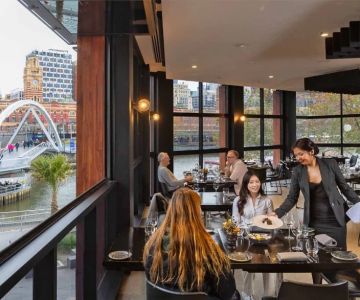
 Coffee Shop3.0 (19 reviews)
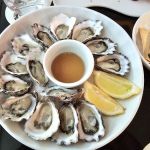 Arches on Market4.0 (92 reviews)
 Gloria Jean's Sydney Central Plaza3.0 (183 reviews)
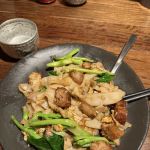 Chat Thai3.0 (40 reviews)
 McDonald's Westfield Sydney3.0 (389 reviews)
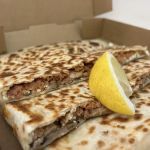 Gözleme King Sydney4.0 (206 reviews)
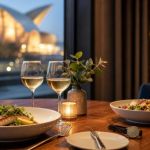 Pre-Theatre Dining in Australia: A Timing Checklist
 The Best Café-Restaurant Hybrids in Australia for Relaxed Dining
 Where to Find the Best Seafood Platters in Sydney for Sharing
 Best Restaurants in Sydney for Authentic Local Food Experience
 How Restaurants Are Using Smart Robots and Automation in Kitchens Across Australia
 The Best Dessert-Only Restaurants in Australia That Go Beyond Cakes