
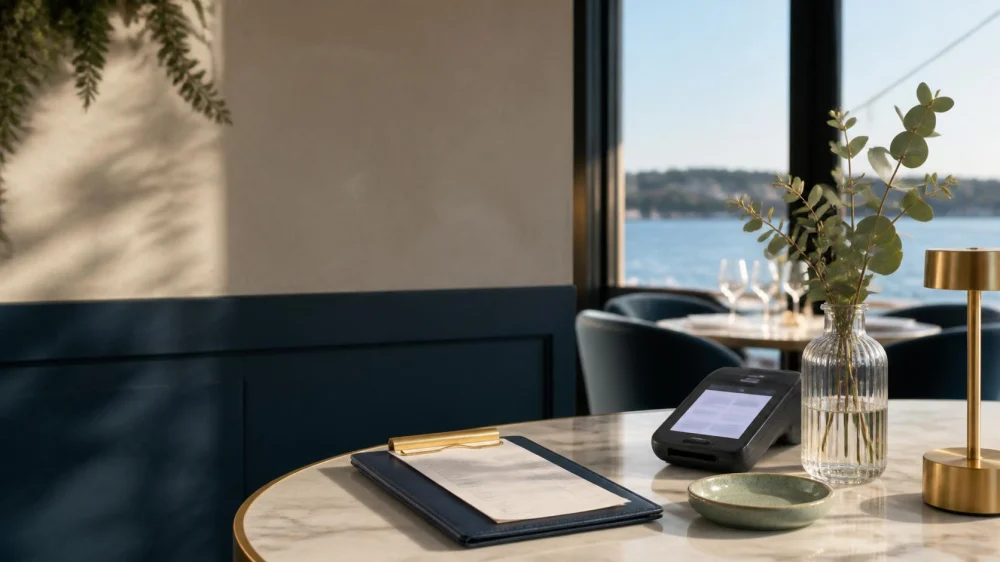
Australian Restaurant Tipping: Read the Bill, Choose Wisely
Table of contents
- Quick answer
- Separate tips from other charges
- Check prices before ordering
- Handle payment-terminal prompts
- Plan group payment
- Ask how a tip reaches staff
- Understand card and day surcharges
- Resolve a bill problem calmly
- Advice for international visitors
- Frequently asked questions
- Sources and verification
- Conclusion
Quick answer
In an Australian restaurant, read the itemised bill before deciding whether to tip. Separate menu prices, weekend or public-holiday surcharges, card surcharges, service charges, and optional gratuity. Ask whether a tip is voluntary and how it is distributed. Enter or approve the amount yourself, review the final total, and keep the receipt. Do not copy a tipping percentage from another country without first understanding the restaurant’s actual charges and local practice.

Betty's Burgers
SydneyCouncil of the City of SydneyNew South Wales
Shop 4/44 Market St, Sydney NSW 2000, Australia
Separate tips from other charges
A tip or gratuity is an amount a diner chooses to add in recognition of service. It should not be confused with a fee the business adds under its stated terms. A card surcharge relates to payment method. A weekend or public-holiday surcharge relates to the day. A service or banquet charge may be built into a group agreement. Each should be identified before a diner adds anything more.
Ask for an itemised bill. Look for quantities, menu prices, substitutions, drinks, set-menu charges, cake or corkage fees, surcharges, deposits already paid, and the final total. If a line says “service,” “gratuity,” or “tip,” ask whether it is compulsory, optional, or already included under a booking contract. Do not assume the label has the same meaning at every venue.
The Fair Work Ombudsman provides official tools for restaurant and café pay, hours, penalty rates, and entitlements. Diners do not need to calculate staff wages at the table. A voluntary tip and an employer’s legal pay obligations are separate questions.
Venchi - The Galeries Sydney
SydneyCouncil of the City of SydneyNew South Wales
500 George St, Sydney NSW 2000, Australia
Check prices before ordering
Read the current menu and booking terms, including any small-print note about specified days, large groups, set menus, credit cards, or electronic payments. Confirm the price for market items, additions, and substitutions before ordering. For a special meal with a fixed budget, ask the restaurant for an estimated all-in amount.
The Australian Competition and Consumer Commission explains that businesses must not make false or misleading price claims and provides rules for price displays and surcharges. A price that feels high is not automatically unlawful; the useful question is whether required charges were disclosed correctly and applied as stated.
Online menus may be old or belong to another location. Use the restaurant’s official menu for the date and ask about a public-holiday or weekend surcharge when relevant. Save the booking confirmation for a prepaid or high-cost meal.
Handle payment-terminal prompts
Some payment terminals display suggested tip percentages or amounts before the card step. Pause and read the screen. A suggestion is not a command. Select the option that reflects your own decision, including no tip when that is what you choose. Ask staff for help if the interface is unclear, but keep control of the final approval.
Check whether the displayed percentage is calculated before or after taxes and surcharges. Look at the dollar amount rather than relying only on a percentage. If you enter a custom amount, verify the decimal placement and final total before tapping or inserting a card.
When a server holds the device, ask to see the entire screen and select the option yourself. Do not share a card PIN. Keep the terminal and card in view, and collect the itemised bill and payment receipt.
Plan group payment
Before a group meal, ask whether the restaurant splits bills, accepts multiple cards, adds a group service charge, requires a deposit, or uses a set menu. Tell guests about mandatory charges before they order. A surprise at payment time is harder to resolve than a term discussed during booking.
Choose a method: equal shares, each person’s items, or one payer reimbursed later. Decide how shared plates, bottles, deposits, and no-show costs will be divided. If the group wants to add a tip, agree whether it is calculated once on the group bill or individually. Avoid accidentally tipping twice when the organiser has already added an amount.
One person should review the consolidated bill before cards are processed. If separate payments are allowed, confirm that the final balance reaches zero and that each receipt matches the intended amount.
Ask how a tip reaches staff
When distribution matters to you, ask the restaurant. Tips may be pooled, divided among front- and back-of-house staff, paid through payroll, collected by a particular worker, or managed under another documented policy. Cash and electronic tips may follow different paths.
Do not make a server promise a distribution method they do not control. A manager or written policy may provide the accurate answer. If you want to recognise a specific person, ask whether the venue permits a named tip and how it should be recorded.
A service charge does not automatically describe who receives the money. Ask directly. Likewise, the existence or absence of tips does not change the employer’s responsibility to meet applicable workplace laws.
Understand card and day surcharges
As of August 2026, ACCC guidance states that Australian businesses may generally apply card surcharges subject to rules, including a ban on excessive payment surcharges. Where no surcharge-free payment method is available, the minimum unavoidable surcharge must be included in the displayed price. The ACCC also notes announced card-network changes may affect surcharging from 1 October 2026, so diners and businesses should check current guidance rather than rely on an old article.
A card surcharge is not a tip. Ask which payment methods avoid or reduce it and review the amount before authorising payment. A fixed small fee can represent a large percentage on a low-cost order, and ACCC rules address the business’s cost of accepting that transaction.
Weekend and public-holiday menu surcharges have separate display rules. Look for a prominent statement on the menu and ask which dates or times it covers. These surcharges are also not automatically tips.
Resolve a bill problem calmly
If the total seems wrong, do not approve it and hope for a later correction. Compare the bill with the menu and booking terms, identify the exact line, and ask the server or manager to explain. Simple quantity, table, or discount errors can often be corrected immediately.
If a terminal-added tip was accidental, tell staff at once and request a corrected transaction and receipt. Keep records of any void or refund. Refund timing may depend on the payment network.
For an unresolved consumer issue, preserve menus, screenshots, booking terms, bills, and communications. The ACCC website explains consumer rights and how to report issues, while state and territory consumer agencies may provide direct assistance. For a workplace-pay concern, use Fair Work Ombudsman resources rather than trying to solve it through a diner’s tip.
Advice for international visitors
Visitors should avoid assuming that the tipping expectations of their home country transfer directly to Australia. Read the local bill, observe only as context, and make an independent choice. Ask a neutral question such as “Is any service charge already included?” rather than asking staff to tell you what you must tip.
Check the card terminal currency. Dynamic currency conversion can present a home-currency option with its own exchange rate; it is separate from tipping and restaurant surcharges. Review the rate and charges from your card issuer before choosing.
Frequently asked questions
Is tipping compulsory in Australian restaurants?
A voluntary tip is a choice, but a disclosed contractual service charge or surcharge may be part of the bill. Ask what each line means and review booking terms.
Is a card surcharge the same as a tip?
No. It is a payment-method charge subject to Australian rules. It does not necessarily go to service staff.
Should I tip on a public-holiday surcharge?
There is no automatic answer. First identify the base bill and required surcharge, then choose any voluntary amount deliberately. Check whether the terminal calculates suggestions on the full total.
Can I ask where tips go?
Yes. Ask the venue for its distribution policy, especially if you want to recognise a particular team or worker.
What if the terminal has no obvious “no tip” option?
Do not approve an unclear amount. Ask staff to show how to enter zero or bypass the prompt, then verify the final total.
Sources and verification
- Australian Competition and Consumer Commission, Card Surcharges — current consumer rules, disclosure, excessive surcharges, and upcoming changes.
- ACCC, Price Displays — guidance on displayed prices and restaurant surcharges.
- Fair Work Ombudsman, Understanding the Fast Food and Restaurant Industries — official pay and entitlement resources.
Check these official pages and the restaurant’s current menu and booking terms at the time of payment.
Conclusion
Tipping is easiest when the bill is transparent. Identify every required price and surcharge, understand any service line, and then make a voluntary choice without pressure or duplication. A careful review protects both the diner’s budget and the meaning of the amount they intentionally leave.

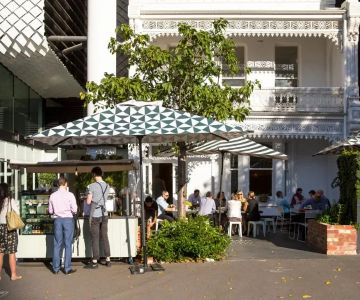


 Salt&Pepper3.0 (9 reviews)
 ONEA Café4.0 (77 reviews)
 Grill'd Burgers - Westfield Sydney4.0 (916 reviews)
 Arches on Market4.0 (92 reviews)
 Hanaichi Sydney Central Plaza4.0 (12 reviews)
 Harry's Café de Wheels - Darling Quarter3.0 (119 reviews)
 How Restaurants in Australia Are Using AI to Recommend Dining Spots Based on Mood and Weather
 The Best Eco-Friendly Restaurants in Sydney Leading the Sustainability Charge
 Australian Pub Meals: How to Order at the Bistro
 Best Dining Spots in Australia for Craft and Specialty Coffee With Full Meals
 Australian Café Cabinet Food: Ask Before You Order
 The Best Restaurants in Australia for Coffee Lovers That Also Serve Meals