
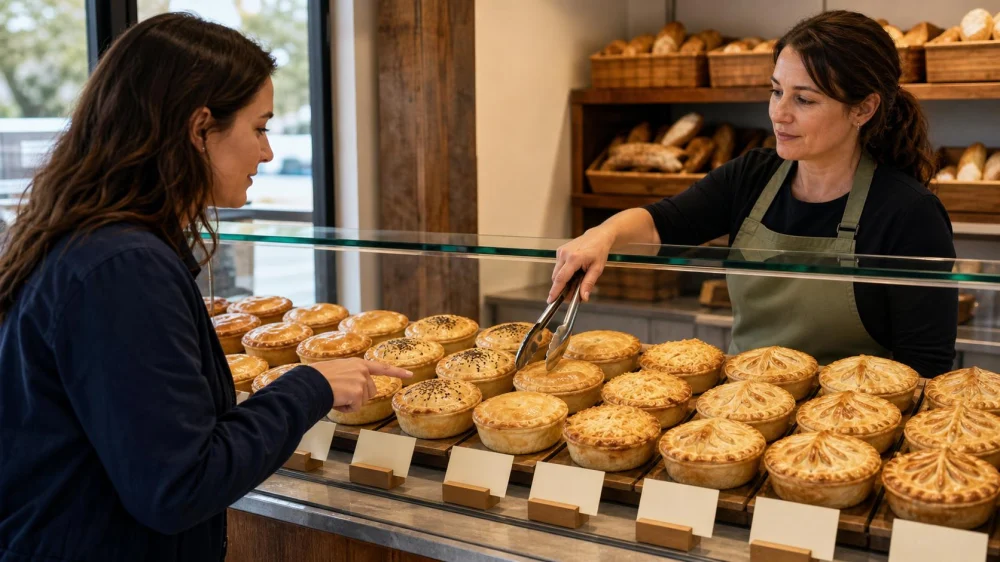
How to Order an Australian Meat Pie at a Bakery
On this page
Quick answer
An Australian bakery meat pie is usually a hand-sized savoury pie with a pastry base, hot meat filling and pastry lid. Ask what is inside, whether the filling is minced or chunky, how peppery or rich it is, and whether the pie is hot enough to eat now. Check allergens and choose sauce only after tasting if you want the filling to lead.
This guide is for diners visiting bakeries in Australia. Recipes, names, sizes, prices and service styles vary by bakery and region.
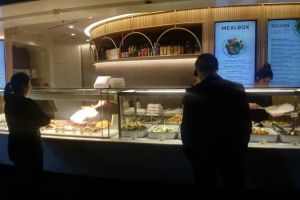
Esque
SydneyCouncil of the City of SydneyNew South Wales
Westfield Sydney, Shop 5005, Level 5/188 Pitt St, Sydney NSW 2000, Australia
What to expect
Meat pies are sold at independent bakeries, cafés, service stations, sporting venues and pie shops. A bakery cabinet may include classic beef, chunky steak, pepper steak, curry, chicken, lamb, mushroom, cheese or seasonal fillings.
The word “meat” does not tell you the cut, texture, sauce, stock or other ingredients. Some pies use finely minced beef in gravy; others use distinct chunks. A premium-sounding name does not guarantee a particular meat percentage or preparation, so ask when it matters.
Pies may be ready to eat, available cold for reheating, or sold in family size. Confirm which version you are ordering before payment.
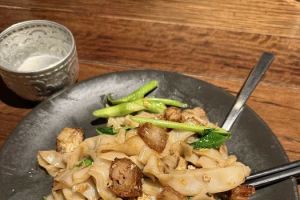
Chat Thai
SydneyCouncil of the City of SydneyNew South Wales
450 Market St, Sydney NSW 2000, Australia
Read filling descriptions
- Plain or classic beef: often a minced-beef-and-gravy style, but the bakery's recipe controls the texture and seasoning.
- Chunky beef or steak: suggests larger pieces, though size and tenderness vary.
- Steak and pepper: may range from mild aromatic pepper to a strong peppercorn flavour.
- Beef and mushroom: adds earthy flavour and may use a cream, wine or gravy-based sauce.
- Cheese-topped or cheese-filled: can place cheese under the lid, through the filling, or on top.
- Curry pie: describes a broad family of spice profiles rather than one standard heat level.
- Chicken pie: may include vegetables, cream, stock, herbs or other sauce components.
Ask whether alcohol, dairy, egg, gluten, soy, sesame, nuts, celery or other ingredients appear in the filling, pastry, glaze or shared preparation when relevant.
Choose pastry and texture
Many meat pies use a sturdy shortcrust-style base and a flaky puff-pastry lid, but bakeries vary. The base should support the filling, while the lid may shatter into flakes. A very saucy pie is easier to eat on a plate than while walking.
Look at the display rather than squeezing the pie. Ask whether a pie has just come from the oven, has been held hot, or is sold chilled. A fresh hot pie can contain filling that is much hotter than the crust feels.
If you prefer a crisp base, ask whether the pie is best eaten immediately. If you plan to travel, a sturdier pastry and thicker filling may be easier to handle than a very flaky or liquid-filled version.
A practical ordering sequence
- Check what is available now. Cabinet labels or online menus may not reflect sold-out flavours.
- Choose filling texture. Decide between minced, chunky, creamy, peppery, curried or vegetable-forward styles.
- Ask about heat. Confirm chilli or pepper intensity if you prefer mild food.
- Confirm service temperature. Say whether you want it hot now or cold to take home.
- Discuss allergens. Name the specific ingredient and ask about pastry, filling, glaze and shared equipment.
- Choose dine-in or takeaway. A plate, cutlery and napkin can help with a hot, saucy pie.
- Add sauce or sides. Ask whether they cost extra and whether they come inside, on top or separately.
When the bakery is busy, decide before reaching the counter and keep questions specific. Staff can answer “Is the pepper steak very peppery?” more easily than “Which pie is best?”
Sauces, sides and drinks
Tomato sauce is a familiar addition, but it is optional. Mustard, barbecue sauce, relish or gravy may also be offered. Request sauce separately if you want to control sweetness, salt and moisture.
A single pie can be a snack or light meal depending on size and appetite. Chips, salad, peas, mash or another side can make it more substantial where available. Ask whether a “pie floater” or pie-and-peas style is on the actual menu rather than expecting every bakery to serve it.
Water, tea or coffee can balance a rich filling. Handle hot drinks and a hot pie one at a time, especially when eating away from a table.
Check allergens and dietary needs
Pastry commonly contains wheat and may contain dairy, egg or other ingredients. Filling may use flour, stock, sauces, cheese, butter or flavourings not obvious from the pie name. Glaze and toppings also matter.
Vegetarian or plant-based pies may share trays, tongs, benches or ovens with meat pies. “Gluten-friendly” wording does not establish that a pie is safe for coeliac disease. Ask the bakery about ingredients and cross-contact controls.
If staff cannot confirm a requirement, choose a sealed item with suitable labelling or another venue rather than relying on appearance.
Meat pie ordering checklist
- The filling and meat type are understood.
- Minced versus chunky texture is confirmed.
- Pepper, curry or chilli intensity suits the diner.
- The pie is hot now or chilled for later as intended.
- Pastry, filling, glaze and shared-equipment allergens are checked.
- Dine-in or takeaway packaging fits the plan.
- Sauce is separate when preferred.
- The first bite is taken carefully because filling holds heat.
- Takeaway storage and reheating instructions are followed.
Limitations and safety notes
There is no single recipe that represents every Australian meat pie. Ingredient quality, meat percentage, pastry style, seasoning, serving size and price vary widely.
Hot filling can cause burns. Let the pie cool briefly, support it over a plate or wrapper, and test a small bite. Refrigerate perishable takeaway promptly and follow the bakery's storage and reheating instructions; do not leave pies in a hot car.
Frequently asked questions
Is a meat pie always beef?
No. Read the full name or ask. Bakeries may sell chicken, lamb, pork, game, mixed-meat or plant-based versions.
What does chunky mean?
It usually signals visible pieces rather than only mince, but the exact cut and size depend on the bakery.
Should I eat the pie with my hands?
You can when it is cool and sturdy enough. A plate and cutlery are useful for a very hot, flaky or saucy pie.
Can a cold pie be eaten without reheating?
Follow the bakery's instructions and label. A pie sold chilled may be intended for thorough reheating.
Are vegetarian pies cooked separately?
Not necessarily. Ask about trays, tongs, benches, fryers and other shared preparation when cross-contact matters.
Sources and evidence notes
The guidance reflects broad Australian bakery practice: meat pies vary by filling and pastry, cabinet availability changes, hot filling retains heat, and pastry and gravy can contain allergens not obvious from the name.
No recipe, meat percentage, regional origin, price, allergen control or storage duration is assumed. The bakery's current ingredient and handling information controls the purchase.
Next steps
At the cabinet, choose whether you want minced or chunky filling and mild or peppery flavour. Ask what is available now, whether the pie is ready to eat, and what allergens are present. Take the first bite over the wrapper or a plate after the filling has cooled enough.

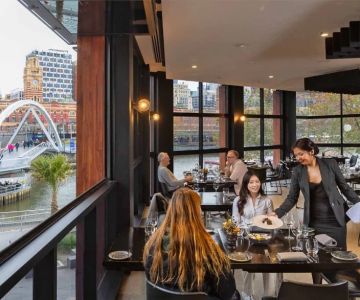

 Chat Thai3.0 (40 reviews)
 THE TERNARY RESTAURANT4.0 (1011 reviews)
 Betty's Burgers4.0 (3942 reviews)
 LAN GARDEN4.0 (19 reviews)
 QTea High Tea by QT Sydney4.0 (97 reviews)
 SWEET CREMA CAFE5.0 (20 reviews)
 Australian Banquet Menus: What Groups Should Confirm
 Where to Find the Best Chocolate Cake in Sydney for Dessert Lovers
 The Best Vegan-Friendly Fine Dining Restaurants in Australia
 How to Read an Australian Restaurant Menu
 The Best Spanish-Style Paella Spots in Melbourne You Won’t Want to Miss
 How Australia’s Restaurant Industry Is Shifting Towards Speedy Casual Dining Experiences